

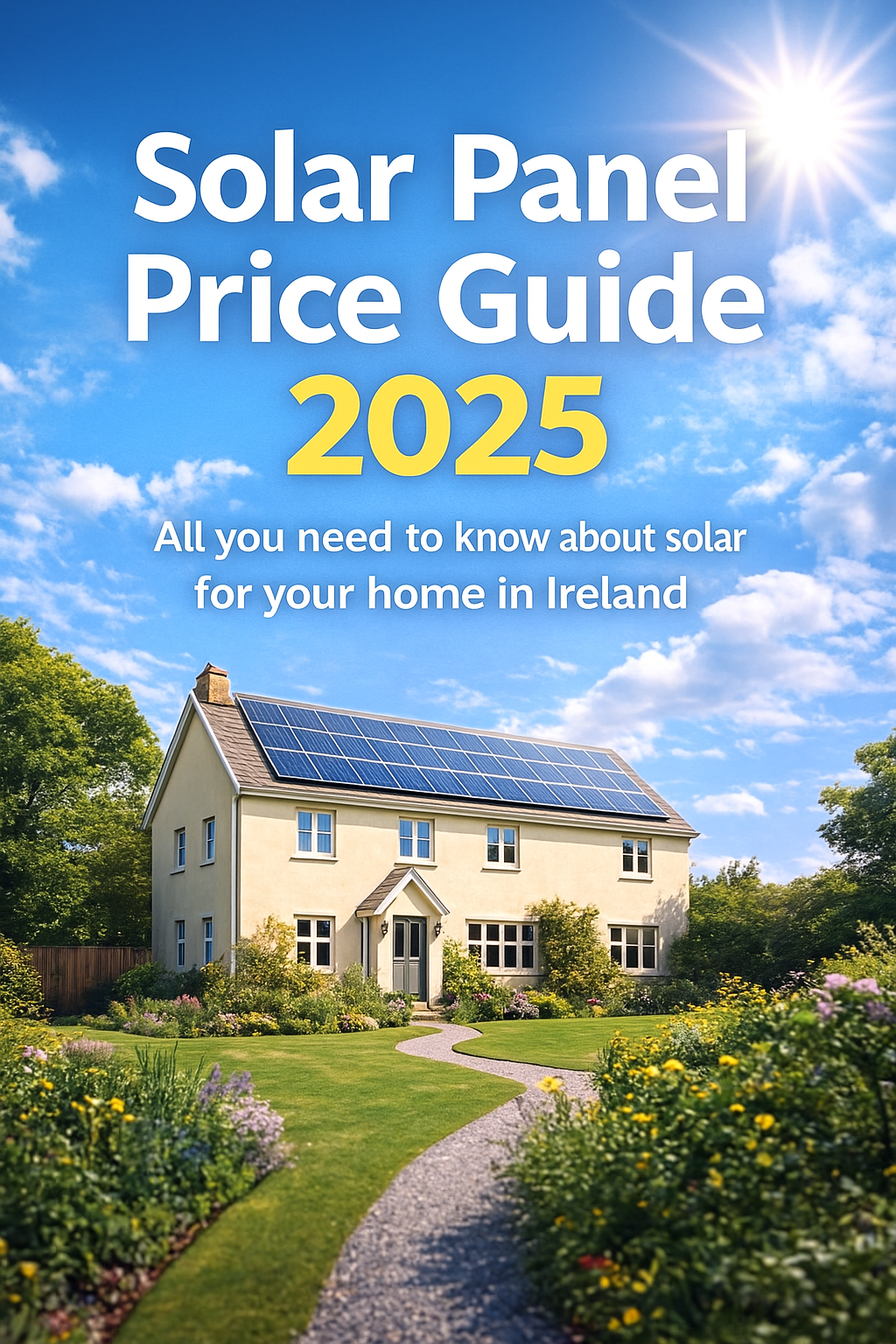
How Much Do Solar Panels Cost in Ireland (2025 Guide)
Introduction
If you’re thinking about installing solar panels in Ireland, one of the first questions you’ll ask is: “How much will it cost?” It’s a fair question — solar is a smart investment, but you deserve to know the full picture rather than guess.
In this 2025 cost-guide we’re going to break it all down: what influences the price, what typical systems run in Ireland, what support you can get from the SEAI and how long before you start seeing real savings.
Spoiler alert: The price varies widely depending on your roof, how much power you use, whether you want battery storage, and which installer you pick. But the good news? Solar is more affordable now than ever—and the value for Irish homeowners has never looked better.
So grab a cuppa and let’s dive in.
What Impacts the Cost of Solar Panels in Ireland?
There isn’t a single fixed price for solar panels because every home is different. The total cost of your system depends on a mix of technical, structural and quality-based factors. Here’s what really drives the price:
1. System Size (kW Capacity)
This is the biggest factor. Solar systems are measured in kilowatts (kW), and the more power you want to generate, the more panels you’ll need.
-
Smaller homes: 3kW systems cost less but produce less energy
-
Average family homes: 4–5kW systems are the most common
-
High usage homes: 6kW+ systems require more panels and higher investment
A larger system means higher upfront cost, but it also unlocks bigger long-term savings and better protection against rising electricity prices.
2. Roof Type, Layout & Orientation
Not all roofs are created equal. Installers assess:
-
Roof direction (south-facing is ideal, but east/west can still perform well)
-
Roof pitch and angle
-
Shading from trees, chimneys or nearby buildings
-
Available surface area
A clear, well-oriented roof is quicker and cheaper to install on, while complex or heavily shaded roofs may require extra design and labour.
3. Solar Panel Quality & Brand
This is where homeowners need to be especially careful.
Panels vary hugely in quality, efficiency and lifespan. Premium panels cost more upfront but deliver far better performance and reliability over the long term. High-quality panels typically:
-
Generate more electricity per square metre
-
Perform better in Ireland’s low-light and cloudy conditions
-
Have longer warranties (often 25 years+)
-
Degrade more slowly over time
Cheaper panels may look attractive due to pricing, but they often come with:
-
Lower efficiency
-
Shorter lifespan
-
Higher risk of failure
-
Reduced long-term savings
⚠️ Many “budget systems” appear cheap simply because inferior panels are being used.
Blue Sky Solar uses premium panels from trusted, proven suppliers only, ensuring customers receive systems that are efficient, durable and built to perform for decades — not just a few years. This focus on quality protects your investment and maximises your return.
4. Inverter & Battery Storage
The inverter converts the solar power generated into usable electricity for your home. Quality matters here too, as a weak inverter can limit overall system performance.
Adding battery storage increases initial cost but allows you to:
-
Store unused solar power
-
Use solar energy at night
-
Reduce dependence on the national grid
-
Increase your self-consumption and savings
While optional, batteries are becoming increasingly popular as homeowners look for greater energy independence.
5. SEAI Grants & Incentives (A Major Cost Factor)
One of the most important influences on solar cost in Ireland is the SEAI Home Solar Grant. This government-backed scheme can significantly reduce the upfront cost of installation, making solar far more accessible for homeowners.
The grant covers part of the installation cost for eligible homes and helps reduce the financial barrier of going solar. Depending on your system size and setup, this support can lower your total investment by thousands of euro.
In addition to reducing upfront cost, the grant also improves:
-
Payback period
-
Return on investment
-
Overall affordability
Most reputable installers, including Blue Sky Solar, will walk you through the grant process and collect it at source, making sure you’re not overwhelmed and that the whole process feels straightforward and manageable.
The availability of SEAI funding is one of the key reasons solar adoption has grown rapidly across Ireland — and it remains one of the strongest incentives for homeowners considering the switch.
Quick Summary
The real cost of solar panels in Ireland depends on:
-
System size
-
Roof layout and orientation
-
Panel and equipment quality
-
Battery inclusion
-
Eligibility for SEAI support
And remember: choosing quality equipment from trusted providers is just as important as the price tag itself.
Typical Cost Ranges for Solar Panels in Ireland (2025)
While every installation is unique, most Irish homeowners fall into a few common system sizes. Below is a realistic breakdown of what you can expect to pay for a standard residential solar PV system in Ireland in 2025.
These figures reflect quality installations using premium equipment and professional installers such as Blue Sky Solar — not cheap, low-performance systems that often come with hidden long-term costs.
3kW System – Small Homes or Low Usage
Best suited for small households or properties with limited electricity demand.
Typical cost before grant: €5,000 – €8,000
After SEAI grant: €4,000 – €6,000
Ideal for:
-
Apartments or small homes
-
Households with lower daytime usage
-
First-time solar adopters
4kW – 5kW System – Average Irish Family Home
This is the most common system size across Ireland and provides excellent balance between cost and energy production.
Typical cost before grant: €7,000 – €11,000
After SEAI grant: €6,000 – €9,000
Ideal for:
-
3–4 bedroom homes
-
Families with moderate to high electricity usage
-
Households planning long-term savings
6kW+ System – Large Homes or High Energy Users
Designed for properties with high energy consumption, electric vehicles, heat pumps or larger families.
Typical cost before grant: €10,000 – €15,000+
After SEAI grant: €9,000 – €13,000+
Ideal for:
-
Large detached homes
-
EV owners
-
Homes with high daytime electricity usage
Optional Add-On: Battery Storage
Adding a battery system allows you to store surplus energy for evening or night-time use.
Battery cost range: €3,000 – €6,000
(Price depends on battery size and brand)
While this increases initial investment, it can substantially reduce reliance on the grid and boost long-term savings.
Other Potential Costs to Consider
Depending on your home, additional costs may include:
-
Electrical upgrades
-
Meter upgrades
-
Roof reinforcement or repairs
-
Monitoring systems
-
Additional scaffolding
A professional survey will confirm if any of these apply.
Why Prices Vary So Much
You might see wildly different quotes between installers — and price alone doesn’t tell the full story.
Lower quotes often involve:
-
Cheaper panels
-
Shorter warranties
-
Reduced performance
-
Minimal aftercare support
Whereas a quality installation focuses on:
-
Long-term efficiency
-
Reliable equipment
-
Professional workmanship
-
Strong warranties and system guarantees
It’s not just about the cheapest system — it’s about the best value over 25+ years.
Quick Cost Snapshot
| System Size | Typical Home Type | After Grant Cost Range |
|---|---|---|
| 3kW | Small home | €4,000 – €6,000 |
| 4–5kW | Average home | €6,000 – €9,000 |
| 6kW+ | Large property | €9,000 – €13,000+ |
SEAI Grants & Financial Support: How Much Can You Save?
One of the biggest incentives for Irish homeowners considering solar is the grant support provided by the Sustainable Energy Authority of Ireland (SEAI). This funding significantly lowers the upfront cost of solar panels — and understanding it properly helps you see your real net cost.
What the Grant Covers
-
The SEAI Solar PV Grant is for domestic solar photovoltaic (PV) systems installed on homes in Ireland.
-
The grant amount is calculated based on the system’s capacity (in kWp).
-
Crucially: The grant is only available if you apply before the installation begins. Starting work early can void the grant.
How Much Is The Grant?
-
For 2025, you can get up to €1,800 for a residential system.
-
The breakdown of the grant calculation:
-
~€700 per kWp for the first 2 kWp.
-
~€200 per additional kWp up to 4 kWp.
-
At 4 kWp system size (or above) you reach the cap of €1,800.
-
Who Is Eligible?
To benefit from the grant you must meet key criteria:
-
You own the home (or private landlord) and it’s occupied.
-
The property must have been built and occupied before 31 Dec 2020 (or meter connected then) to qualify.
-
Your solar installer must be registered with SEAI.
-
The home must not already have received the solar PV grant before at that Meter Point Reference Number (MPRN).
Why This Grant Makes a Real Difference
-
If you apply the €1,800 grant into our earlier cost-ranges, it lowers your effective upfront cost significantly (for example from €8,000 down to €6,200 for a mid-sized system).
-
It improves your payback period because you’re investing less capital for the same output.
-
It also signals credibility: using an SEAI-registered installer, following standards, ensures better quality installations.
Important Notes & Things to Watch
-
The grant does not cover battery storage, solar diverter equipment or high-end extras beyond the core solar PV system.
-
Timing is critical: you must apply first, receive approval, then begin installation. If you install first you risk losing the grant.
-
The grant scheme is subject to change: for instance the maximum value and eligibility may change in future.
How to Get Accurate Quotes & Compare Solar Installers
Once you understand rough costs and grants, the next step is getting quotes tailored to your own home. This is where many homeowners can either make a smart long-term decision — or an expensive mistake.
What a Professional Solar Quote Should Include
A transparent, detailed quote should clearly outline:
-
System size (kW) and estimated annual output
-
Panel brand, model and efficiency rating
-
Whether battery storage is included
-
Full installation cost before and after grant
-
Warranties on panels, inverter and workmanship
-
Estimated payback period and savings
If any of these are missing, ask questions.
Smart Questions to Ask Your Installer
When comparing quotes, don’t just focus on price. Ask:
-
What brand of panels are being installed and why?
-
Are you SEAI registered?
-
What warranties do I receive?
-
How long have you been installing solar systems?
-
Will you handle the SEAI grant application?
-
What aftercare and support is included?
A reputable installer will be happy to explain every part of the process.
Red Flags to Watch Out For
Be cautious of installers who:
-
Push unusually cheap prices
-
Avoid discussing panel brands
-
Offer vague or rushed quotes
-
Don’t clearly explain warranties
-
Pressure you into quick decisions
Solar is a 25+ year investment — take your time and choose quality over short-term savings.
Blue Sky Solar focuses on transparent pricing, premium components and honest advice so homeowners feel confident and informed from start to finish.
Return on Investment & Long-Term Value
Solar panels aren’t just a cost — they’re an investment that pays you back over time.
Typical Payback Period in Ireland
For most Irish homes, the payback period ranges from:
-
6 to 10 years, depending on system size, usage and electricity prices.
After this, the electricity your system generates is effectively free for the remainder of its lifespan.
Long-Term Savings
Over 25+ years, a well-designed solar system can save homeowners:
-
Tens of thousands of euro in electricity costs
-
Provide protection against rising energy prices
-
Reduce dependence on the grid
With electricity prices continuing to rise, these savings only become more significant.
Added Property Value
Homes with solar panels are increasingly attractive to buyers. Solar can:
-
Improve BER rating
-
Increase resale appeal
-
Differentiate your home in the market
It’s not just about saving money — it’s about future-proofing your home.
Final Thoughts: Is Solar Worth the Cost?
So, how much do solar panels cost in Ireland?
The honest answer: it depends on your home, your energy use and the system you choose. But what’s clear is this:
-
Solar is more affordable than ever
-
Grants significantly reduce upfront cost
-
Long-term savings make it a smart financial move
-
Quality matters more than cheap pricing
When installed properly using premium equipment, solar panels deliver reliable performance, strong returns and peace of mind for decades.
Ready to See What Solar Would Cost for Your Home?
If you’re wondering how much you could save by going solar, feel free to give us a quick call — no pressure, no pushy sales talk, just honest, straightforward advice.
Call Jonathan on 083 839 3578
We’re more than happy to walk you through your roof setup, explain how the SEAI grant works, and give you a clear idea of what kind of system and savings you could expect for your home.
Based in Gorey, Co. Wexford, Blue Sky Solar works with homeowners right across the region, and we’re always glad to have a chat. Sometimes it’s just easier to pick up the phone and talk it through than fill out forms — and that’s perfectly fine with us.
-
