

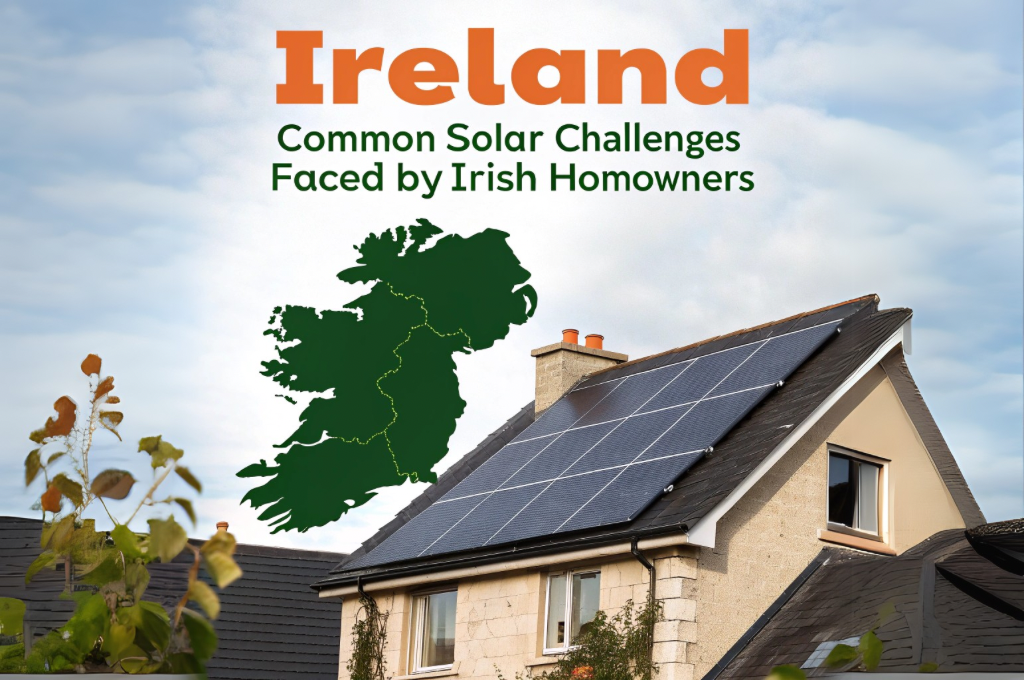
What to Know Before Installing Solar Panels in Ireland
So, you’re thinking about solar. Maybe your bills are creeping up, maybe you like the idea of being less dependent on the grid, or maybe you just like the thought of your roof actually doing something useful.
Whatever the reason, solar is a big decision — and a long-term one. Done right, it can quietly save you money and hassle for 20+ years. Done badly, it can be an expensive disappointment.
I’ve walked a lot of homeowners through this process, so think of this as the chat I’d have with a good friend: no jargon for the sake of it, no hype — just what actually matters.
1. Start With Your Roof (Before You Think About Panels)
If the roof isn’t right, nothing else matters. Before you look at brands, batteries or fancy apps, we look up.
1.1 Roof condition
Ask yourself (or your installer):
-
How old is the roof?
-
Any leaks, loose tiles or obvious sagging?
-
Has it been re-roofed in the last 5–10 years?
If the roof is near end-of-life, it’s better (and cheaper in the long run) to sort that before you put panels on. You don’t want to pay someone to take everything off and re-fit it in a few years.
1.2 Orientation & pitch
In simple terms:
-
South-facing: best overall yield.
-
East/West: still very good, often a lovely spread of generation across the day.
-
North-facing: usually a last resort; we’d want to run the numbers carefully.
Ideal pitch is roughly 30–40°, but don’t get hung up on perfection. Modern panels are efficient enough that a “decent” roof can still be very worthwhile.
1.3 Shading & usable area
We’re looking for:
-
Minimal shading from trees, chimneys, dormers, neighbouring houses.
-
A decent block of roof where we can fit a sensible number of panels in one or two arrays.
A bit of morning or late-evening shade might be no big deal. Constant shade from a big tree across the middle of the day? That’s a problem. A good installer will model this, not guess.
2. Get a Handle on Your Energy Use (Past, Present, and Future)
This is where we make sure you’re not just “buying panels” but building the right system.
2.1 Look at the last 12 months of bills
Grab a stack of bills (or your online portal) and check:
-
Average kWh per month
-
Seasonal changes (higher in winter with heating, maybe)
This gives us a baseline of what you actually use, not what someone’s sales brochure says.
2.2 Think about the next 5–10 years
Solar is long-term. Ask yourself:
-
Planning to buy an electric car?
-
Thinking about a heat pump or electric heating upgrades?
-
Kids becoming teenagers (more showers, more devices, more everything!)?
-
Working from home more?
All these increase demand. Sometimes it’s smarter to size the system with these in mind, rather than only your current usage.
3. Understand What You’re Actually Buying (System Components 101)
A solar system is more than just “some panels on the roof”. At minimum, you’ve got:
-
Solar panels – generate DC electricity.
-
Inverter – converts DC to AC your home can use.
-
Mounting system – rails, brackets, fixings that attach to your roof.
-
Cabling & protections – isolators, breakers, all the safety bits.
Optionally, you might have:
-
Battery storage – stores excess energy for evening/night-time use.
-
Diverter – sends surplus power to your immersion heater.
-
Monitoring system/app – shows you real-time generation, usage, and export.
A good installer will explain why they’re recommending a particular type of panel, inverter, or battery — not just throw brand names at you.
4. Cost, Grants & Payback – The Boring Bit That Actually Matters
Let’s talk money like grown-ups.
4.1 What drives the cost?
-
System size (in kW) – more panels = more cost, more output.
-
Battery or no battery – batteries add cost but can increase self-consumption.
-
Roof complexity – simple, straight roofs are easier (and cheaper) than wild shapes with lots of cuts and obstacles.
-
Component quality – top-tier panels and inverters cost more but often come with longer warranties and better performance.
If one quote is dramatically cheaper than the others, there’s usually a reason. It might be:
-
Cheaper, lower-tier equipment
-
Less labour time allowed for the install
-
Minimal aftercare or support
4.2 Grants & incentives
In Ireland, government support schemes and grants can significantly reduce the upfront cost for homeowners. The exact amounts and rules change over time, so it’s always worth:
-
Checking the official SEAI website for the latest info
-
Confirming your chosen installer is approved for relevant grants
-
Making sure the grant application is done in the correct order (usually before works begin)
4.3 Payback & realistic expectations
Solar isn’t a scratch card; it’s more like a long-term savings plan. Payback depends on:
-
How much of your solar electricity you use directly
-
Your unit price for electricity
-
Export payments/feed-in tariffs for energy you send back to the grid
-
Whether you’ve got a battery and how you use it
A good installer won’t promise you a magic “exact payback date”, but they should be able to give scenarios: conservative, realistic, and optimistic — and explain what assumptions they’re using.
5. Battery or No Battery? The Honest Conversation
This is where a lot of confusion lives.
5.1 When a battery can make sense
-
You’re out of the house most of the day and home in the evenings.
-
You want to maximise self-consumption and reduce export to the grid.
-
You like the idea of some backup capability (depending on system design).
5.2 Things to understand clearly
-
Battery warranty (years and cycles)
-
Usable capacity vs total capacity
-
How it integrates with time-of-use tariffs (charging from cheap night-rate, etc.)
A battery can be brilliant. It can also be an expensive add-on that you don’t use properly if it’s not thought through. This is where an honest chat (not a sales script) is worth its weight in gold.
6. How the Installation Process Actually Works
Here’s how it normally goes when things are done properly:
6.1 Site survey
Not just a quick look from the street. A proper survey includes:
-
Measuring roof areas
-
Checking roof structure and access
-
Looking at your consumer unit / fuse board
-
Discussing cable routes and equipment locations
-
Talking through your usage pattern and goals
6.2 System design & quote
You should receive:
-
A system layout (where panels go, how many, orientation)
-
Equipment list (panel make/model, inverter, battery, diverter, etc.)
-
Estimated annual generation and savings (with assumptions clearly stated)
-
Total cost, including all labour, materials, scaffolding, paperwork
If any of that is missing or vague, ask questions.
6.3 On-site installation – what to expect
On install day (or days), typically:
-
Scaffolding goes up.
-
Roof team fits mounting rails and panels.
-
Electrician installs the inverter, isolators, cabling, and other components.
-
System is tested, commissioned, and connected.
-
You’re shown how to use the system and monitoring app.
A tidy installer will leave the place as they found it, apart from the new gear that’s quietly making electricity for you.
6.4 Paperwork & certification
After installation, you should receive:
-
Electrical certification and sign-off
-
Warranty information for all major components
-
Any documentation needed for grants or export payments
If you have to chase hard for paperwork, that’s a red flag.
7. Maintenance, Monitoring & Living With Solar
Good news: solar has no moving parts on the roof, so maintenance is fairly light.
7.1 Routine care
-
Panels generally just need rain and the odd rinse if they get heavily soiled (bird mess, moss, etc.).
-
Inverters typically last 10–15 years; you may need to replace one over the life of the system.
-
Keep vents around the inverter and battery clear and dust-free.
7.2 Monitoring performance
Most modern systems have an app or web portal. With it, you can:
-
See how much you’re generating
-
See how much you’re using vs exporting
-
Spot any major dips that might signal an issue
You don’t need to obsess over it, but a quick look now and then helps you get the most from the system.
8. Questions You Should Ask Any Installer
Here’s the cheat-sheet I’d give a friend:
-
Are you approved for the current grant schemes?
-
What brands of panels and inverters are you proposing, and why those?
-
What’s the total installed price, including scaffolding and all electrical work?
-
What are the warranties on panels, inverter, battery, and workmanship?
-
Can you show me examples of similar installs you’ve done locally?
-
Who do I call if there’s a problem in 3, 5 or 10 years?
-
What generation and savings have you assumed, and can I see the numbers behind them?
A good installer will be happy to answer these. If someone dodges or rushes you, that tells its own story.
⚡ Ready to See What Solar Could Do for Your Home?
If you’re a homeowner in Leinster and want a system that keeps your bills down and keeps essential circuits running during power cuts, we’ll design a setup tailored to your roof and usage.
Want to know what your savings could look like with the SEAI grant taken off the top? Just give Jonathan a quick call on 083 839 3578 — no pressure, no sales tactics, just a friendly chat from an experienced installer based in Gorey, Co. Wexford, who’ll give you straight answers and a clear idea of what’s possible for your home.
